
We Must Develop Our People
As Nigeria’s oil and gas industry enters into a defining phase of investments with a clear ambition to increase crude oil production, unlock our gas potential, attract more investment, strengthen indigenous participation, expand domestic value creation, and build an energy sector capable of supporting national economic growth; these opportunities will be determined not only by the resources beneath our soil and waters, but by the capabilities, leadership, and commitment of the people responsible for turning those resources into national prosperity.
Nigeria’s upstream regulator, NUPRC, has set its sights on significant production growth supported by asset re-entry, improved recovery programmes, and accelerated project execution. By June 2026, combined crude oil and condensate production was reported at 1.735 million barrels per day. This number is quite compelling.
In gas, the opportunity is equally significant. Nigeria has approved more than 25 non-associated gas field development plans since the Petroleum Industry Act, attracting over $4.9 billion in investment and unlocking approximately 9,790 billion standard cubic feet of gas reserves, according to NUPRC reporting.
These figures represent opportunity. They also represent responsibility. This is because behind every barrel produced, every cubic foot of gas monetised, every facility commissioned, and every investment decision made, there are people responsible for them and this brings us to a question that deserves serious industry attention:
We Have The Oil Do We Have The People?
Not merely the people to occupy positions. NO. More importantly, our focus should be on the people to deliver the ambition.
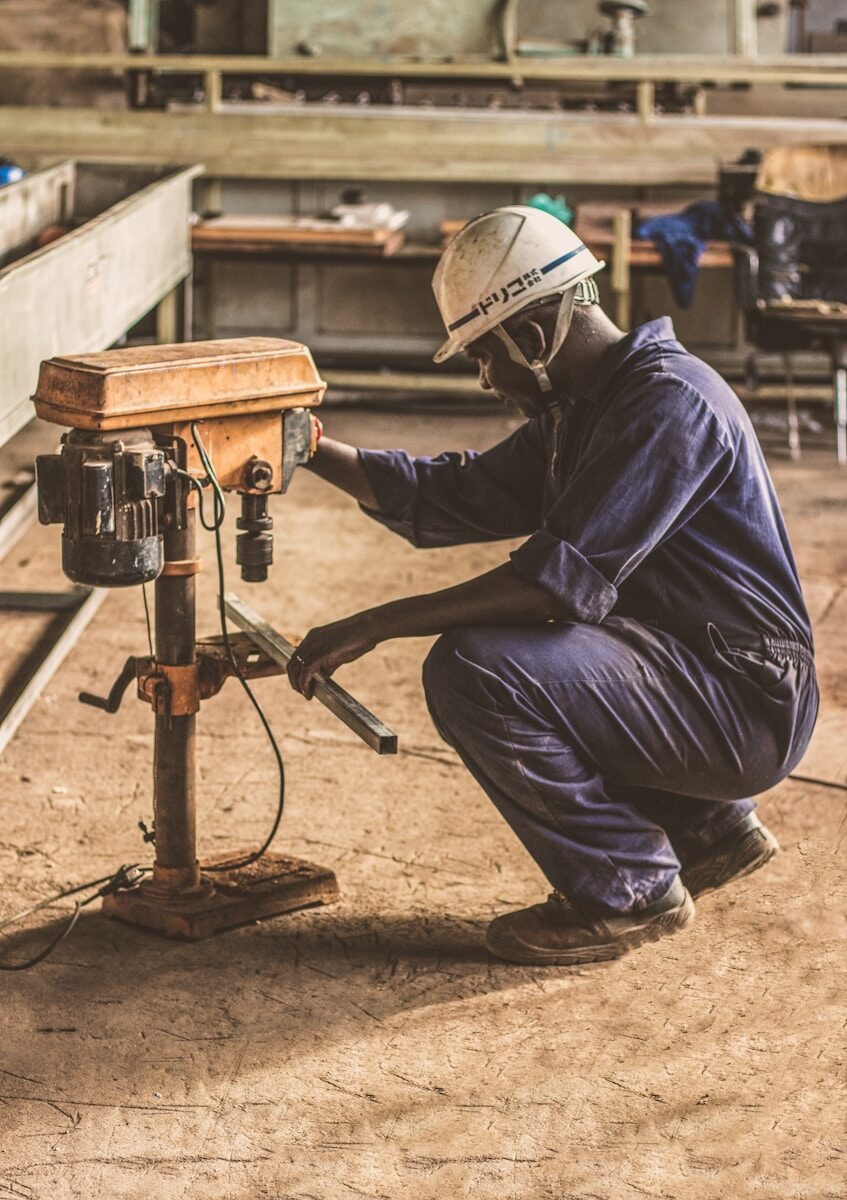
An offshore development does not succeed because the reservoir exists. It succeeds because people; geoscientists understand the subsurface, engineers design and execute the facilities, project managers coordinate complex delivery, commercial teams structure viable investments, and operations professionals sustain safe and reliable production.
A gas project also does not become a catalyst for industrialization simply because molecules are available. It requires people who can develop the infrastructure, negotiate commercial arrangements, manage operations, build markets, and ensure that gas reaches the industries and consumers that need it.
A refinery does not deliver value because it has nameplate capacity. It delivers value because people operate it safely, maintain its assets, optimise performance, manage supply chains, and respond effectively to changing market conditions.
Now the challenges are indeed familiar: ageing infrastructure, operational disruptions, project delays, capital constraints, security risks, regulatory complexity, and the need to improve the commercialization of gas. But there is another challenge that cuts across all of them: human capability.

Our Production Ambitions Demand A New Level of Capability
Assets create potential, people create performance
Nigeria’s ambition to grow oil production to 3 million barrel per day poses not simply a production target but also a workforce challenge. Moving from approximately 1.7 million barrels per day in combined crude and condensate production, as reported in June 2026, toward higher sustained output requires more than drilling additional wells. It requires:
- Reservoir management that maximises recovery and protects long-term asset value.
- Engineering capability to maintain and modernise ageing infrastructure.
- Project execution discipline to deliver developments on schedule and within budget.
- Operational excellence that reduces downtime and improves asset reliability.
- Strong HSE leadership that ensures production growth never comes at the expense of people or the environment.
- Commercial and financial expertise to convert opportunities into bankable projects.
The question for industry leadership is not whether we can announce ambitious targets, it is whether we have built the organisational capability to deliver them repeatedly. The next phase of Nigeria’s oil and gas growth will require fewer execution gaps, stronger accountability, and a workforce equipped to manage increasingly complex assets and operating environments.
Gas, one of the resources we have in abundance, in trillions of cubic feet, can support power generation, industrialization, manufacturing, fertilizer production, domestic energy access, and export earnings. But the commercialization of gas requires a different mindset from simply producing hydrocarbons.
We need people who understand the entire gas value chain. From exploration and development to processing, transportation, distribution, marketing, and utilization; from field development plans to actual delivery. Nigeria does not only need more gas projects. Nigeria needs more of her people who can make gas projects work.
The increasing participation of indigenous companies in Nigeria’s oil and gas industry presents an important opportunity to deepen local capacity. But indigenous participation should not be measured only by the number of assets acquired, licences awarded, or contracts secured. A stronger measure is the depth of capability being built.
- Can Nigerian companies independently manage complex offshore developments?
- Can we develop world-class technical teams?
- Can we build reliable supply chains and maintenance capabilities?
- Can we finance and execute projects while meeting international standards?
- Can we retain experienced professionals and develop the next generation of leaders?
- Can our workforce compete beyond Nigeria?
Asset ownership is important. But the ability to operate, optimise, expand, and create value from those assets is what ultimately determines competitiveness. The industry must move from a model where local participation is primarily about access to opportunity; to one where local capability becomes a source of competitive advantage.
The Workforce Of Tomorrow Must Be Built Today
Indigenous participation must evolve from ownership to capability.
One of the greatest strategic risks facing the oil and gas industry is the gap between the capabilities we currently have and those we will require in the years ahead. We must begin to build a workforce that combines deep technical expertise with commercial awareness, digital fluency, adaptability, and leadership.
The oil and gas workforce is evolving. Digital technologies are changing operations, data and analytics are improving decision-making, automation is reshaping maintenance and production workflows, advanced engineering is enabling more complex developments, energy transition is also creating new requirements in emissions management, efficiency, and energy systems.
The question is whether our people are being prepared for this future.
This requires a deliberate industry-wide commitment to:
- Develop – Invest in structured technical training, professional certifications, apprenticeships, graduate development, and leadership programmes.
- Deploy – Give people meaningful opportunities to apply their knowledge on real projects, complex assets, and critical business challenges.
- Retain – Create environments where competence is recognised, performance is rewarded, and experienced professionals can build long-term careers.
- Transfer – Capture institutional knowledge and ensure that expertise is passed from experienced professionals to the next generation.
- Diversify– Expand opportunities for qualified Nigerians across disciplines, regions, and backgrounds, while ensuring that competence remains the foundation of advancement.
Leadership As The Multiplier
People do not perform at their full potential simply because an organisation has talented individuals. They perform when leadership creates the conditions for excellence.
In Nigeria’s oil and gas industry, leadership must go beyond managing current operations. It must build institutions capable of delivering future opportunities. This means setting clear expectations, making decisions with discipline, holding teams accountable, and creating a culture where technical competence and integrity are valued.
Leadership is not simply about delivering today’s numbers. It is about building the capability to deliver tomorrow’s numbers. The economics of people must enter the boardroom because there is a tendency in capital-intensive industries to focus heavily on financial investment while treating workforce development as an operating expense.
That mindset deserves reconsideration.
A well-trained engineer can prevent costly equipment failure; a capable project manager can reduce schedule overruns; an experienced operations team can improve uptime and production reliability; a strong commercial team can unlock investment and improve project economics, and a competent HSE culture can prevent incidents that carry human, financial, and reputational consequences.
These are not abstract benefits. They are contributors to business performance and so investment in people must be evaluated with the same seriousness as investment in equipment, infrastructure, and technology.
The responsibility for building capability does not belong to one organization. It is shared across the ecosystem. Government and regulators must continue to support an environment that encourages investment, transparency, and the development of local capacity. Operators must invest in people, knowledge transfer, and operational excellence. Indigenous companies must build the technical and commercial capabilities that allow them to compete sustainably. Universities and technical institutions must strengthen the connection between education and industry requirements. Professional bodies must continue to support standards, certification, and lifelong learning and industry leaders must take personal responsibility for developing the people who will inherit the opportunities we are pursuing today.
The Executive Call To Action
As we pursue higher production, gas development, deeper indigenous participation, and greater investment, we must recognise that the most important infrastructure we are building is not always made of steel and concrete; it is also made of competence, it is made of experience, it is made of trust, it is made of leadership, it is made of people who know what to do, understand why it matters, and have the discipline to deliver.
The industry must therefore elevate human capital from a supporting function to a strategic priority.
Let us commit to measurable workforce development targets. Let us strengthen succession planning for critical technical and leadership positions. Let us deepen industry-academia partnerships. Let us create meaningful pathways for young Nigerian professionals. Let us reward competence, integrity, and performance. Let us make knowledge transfer a deliberate business practice. Let us ensure that our ambition for production growth is matched by an equally ambitious commitment to developing the people who will deliver it.
Because the real question is not whether Nigeria has oil, we all know it does. The real question is whether we have built the capabilities, institutions, and leadership required to turn that resource into lasting value and we all know we do not yet have enough of them; therefore, we must be prepared to build them.
That is the leadership challenge before us. That is the opportunity before Nigeria; and that is where the next chapter of our oil and gas story will be written.
“ We Have The Oil, We Have The Gas. We Want The Investment, We Want The Growth. Now, We Must Develop The People! ”
About Workforce Energies
Workforce Energies is Nigeria’s premier people operations services provider, dedicated exclusively to the oil, gas, and energy sector. With over 20 years of expertise, we are at the forefront of delivering innovative, bespoke human resource solutions tailored to the unique needs of this industry. We partner with organisations across the energy value chain to ensure workforce efficiency, productivity, and compliance with local regulations.
Paschal Kohode
Country Director
Workforce Energies
Get in touch: energy@workforcegroup.com
📞 Call us: +234 90 3194 6744
https://workforcegroup.com/energy-services/